


GENERAL INFORMATION AND ACADEMIC ADMINISTRATION
 |  |  |  |
|---|---|---|---|
 |  |

SCHOOL PROFILE
-
Name of the Institution: Mariano Marcos State University
-
Street/Barangay: 16 Quiling Sur
-
City/Municipality: City of Batac
-
Province: Ilocos Norte
-
Country: Philippines
-
Postal or Zip Code: 2906
-
Telephone No: (077) 792-3191, (077) 792-3878
-
Fax No: (077) 792-3191
-
E-mail address: mmsuop@yahoo.com
-
Website address: http://www.mmsu.edu.ph
-
Year Established: 1978
-
Name of the head/President: Dr. Shirley C. Agrupis
A BRIEF HISTORY OF MMSU AND ITS ACADEMIC SUPPORT SYSTEM
On January 6, 1978, the Mariano Marcos State University (MMSU) was founded by Presidential Decree No. 1279, which was issued by the President Ferdinand E. Marcos at the time. The decree combined the academic departments of the Ilocos Norte Agricultural College (INAC) and the Ilocos Norte College of Arts and Trades (INCAT), as well as the former Mariano Marcos Memorial College of Science and Technology (MMMCST) in Batac and the Northern Luzon State College (NLSC) in Laoag City. On January 6, 1978, the Mariano Marcos State University (MMSU) was founded by Presidential Decree No. 1279, which was issued by the President Ferdinand E. Marcos at the time. The decree integrated the college departments of the Ilocos Norte Agricultural College (INAC) and the Ilocos Norte College of Arts and Trades (INCAT), as well as the former Mariano Marcos Memorial College of Science and Technology (MMMCST) in Batac and the Northern Luzon State College (NLSC) in Laoag City.
The municipalities of Currimao and Dingras, as well as Laoag City, are home to campuses for the university. MMSU has 66 undergraduate and graduate degree programs. The majority of these programs have received accreditation from state universities and colleges at different levels from an assessment agency. The Commission on Higher Education has designated it as a Center of Development (COD) for the study of agriculture, biology, forestry, and information technology education, as well as a Center of Excellence (COE) for teacher education. Additionally, it has been selected as one of the few National Universities for Fisheries and Agriculture Education in the Philippines.
MMSU also equipped with sports facilities and campus facilities as the academic support system. For sports facilities they offer swimming pool, fitness gym, indoor sports courts, outdoor sports courts and outdoor sports field. For campus facilities they have library, ITC, social rooms, cafetaria, religius facilities, students supports centers and health and wellness.
LABORATORY HIGH SCHOOL AND ITS TEACHING SYSTEM
LABORATORY HIGH SCHOOL
The Mariano Marcos State University is a multidisciplinary, publicly supported university that provides education to the Ilocos region of the Philippines as well as neighboring areas. Prior to becoming the Ilocos Norte Institute of Technology, the University High School – Batac was known as the Batac Rural High School. It then changed its name to the MMMCST and merged with the Northern Luzon College to become the Mariano Marcos State University by virtue of P. D. 1279.
By virtue of Resolution No. 23, S. 1975 of the Board of Trustees of Mariano Marcos College of Science and Technology, an Agricultural Science High School was established in 1975 in addition to the Laboratory High School. Its main goals were to offer the best science education possible and to produce highly scientific and technological students who would serve as feeders to the college's science-oriented programs. But in 1982, this Science High School was shut down due to budgetary issues.
After three years, the MMSU, led by President Santiago R. Obien, and Dr. Cleofe M. Bacungan, the PSHS Director at the time, recognized the importance of having a science class in the MMSU University High School and teamed up to reopen the Science High School for the 1985–1986 academic year. On August 2, 1986, a Memorandum of Agreement was drafted and duly signed. This science course is still being offered today.
The Laboratory High School's curriculum as a member of the Integrated University Laboratory Schools (IULS), Mariano Marcos State University (MMSU) strives to offer the greatest instruction possible in the technological and scientific domains. The Laboratory High School - Science Curriculum, the Laboratory High School Laoag, and the Laboratory Elementary School are the three schools that make up the IULS.
A unique program called the Laboratory High School - Science Curriculum picks students with strong aptitudes and a passion for science and maths. The curriculum aims to enhance students' scientific and technological abilities while preparing them for science-focused college programs.
Regular high school classes, including general education and electives, are offered at the Laboratory High School Laoag. The curriculum is in line with the Department of Education's K–12 Basic Education Program. The Laboratory Elementary School is a primary school that offers young students enrichment activities in addition to a basic education. The curriculum prioritizes the development of literacy, numeracy, and values and is also based on the K–12 Basic Education Program.
The MMSU faculty and students conduct research, conduct extension, and conduct training activities at the IULS. The IULS works in partnership with a range of stakeholders to raise academic achievement and improve the quality of education.
TEACHING SYSTEM
PEDAGOGICAL CONTENTS
TEACHING METHODS, LEARNING MATERIALS AND INNOVATION
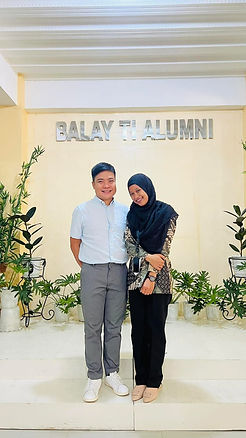
Mark Lawrence Antonio Fernandez, Ph.D
He is my resource teacher or my cooperating teacher during my teaching internship at Laboratory High School, Mariano Marcos State University. He has 5 English classes and 3 English materials (12A {21st Contemporary Literature}, 11A {Oral Communication}, 11B {Oral Communication}, 10 Camia {Literature}, 10 Sampaguita {Literature}). He often uses table rows layout in his class as the classroom setting with the teaching aids: Whiteboard, marker, chalk and projector. In addition, I did the observation to familiarize with different environment, methods, curriculum and getting know the students as the preparation for my demo-teaching in the fulfillment of the Sea-Teacher Program Batch 9. Thank you so much sir Marky for helping me during my time at MMSU.
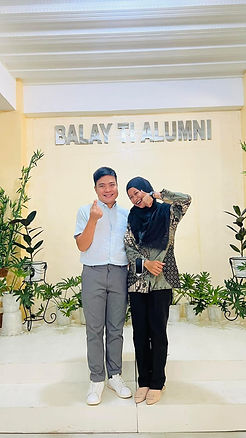
As part of the Sea-Teacher program, I had the opportunity to observe a teacher (Sir Marky) at Laboratory High School, Mariano Marcos State University in the Philippines. The program emphasizes cross-cultural teaching experiences, and from my observation there are some differences just like the time allocation for every subject. In Indonesia we will have 3 hours for every subject in a day for instance: Mathematics, Science and English but at Laboratory High School they just have 1 hour for every subject thus, to make teaching and learning activities in the classroom effective sir Marky employed a combination of teacher-centered teaching methods, traditional learning materials, and innovative real-life applications to facilitate the learning process.
The teacher primarily employed teacher-centered teaching methods, characterized by the following:
-
Lectures: He delivered the content through traditional lectures and the students were encouraged to listen and take a notes as the teacher explained concepts and lessons.
-
Question-and-Answer: Sir Marky frequently engaged students through question-and-answer sessions where this approach ensured that students were actively participating in class discussions and hone the critical thinking skills through asking them with some essential questions and examining or describing some pictures and the students were expected to present their thoughts.
-
Direct Instruction: Sir Marky provided clear and structured instructions, leading students through the learning process step by step.
LEARNING MATERIALS
The learning materials used by sir Marky were traditional and included:
-
Textbooks: The primary source of content was textbooks approved by the local education authorities. These textbooks followed the curriculum and provided structured information which is the K-12 Enhance Basic Curriculum.
-
Visual Aids: He made effective use of pictures, diagrams, and charts to supplement textbook content. These visual aids helped to illustrate complex concepts and engage students visually.
INNOVATION
Real-Life Applications: Despite the teacher-centered approach and traditional learning materials, sir Marky introduced innovation through real-life applications which is practical examples. Sir Marky regularly incorporated practical, real-life examples and anecdotes related to the lesson content. This made the student reflect on the importance of the lesson for their lives.
CONCLUSION
The teacher I observed in the Sea-Teacher program successfully blended traditional, teacher-centered teaching methods and learning materials with innovative real-life applications. While the teacher-centered approach was prominent, the introduction of practical examples, provided students with valuable real-world experiences and made the content more meaningful since as my observation sir Marky always tries to give a contextual examples so that, the students can understand about the material deeply. Even though, sir Marky used teacher-centered method but Sir Marky always provides opportunities for students to express their opinions on the material they learned. This approach aligns with the program's goal of facilitating cross-cultural teaching experiences while maintaining a balance between traditional and innovative methods.

TEACHING PLAN & TEACHING PRACTICE
TEACHING PLAN & TEACHING PRACTICE
After completing the observation week that started from 18 until 26 September 2023. On tuesday, 26 September 2023 sir Marky told me that I will do my demo-teaching in 10 Camia class and on Friday, 29 September 2023 he informed me about the date and the topic for my teaching practice with 2 hours of teaching time. It was on Wednesday, 04 October 2023 with the topic literary text "Proud to Be a Filipino" and Ethics and Techniques in Public Speaking. I had 4 days to prepare the lesson plan, power point, worksheets and other teaching aids.
Here are my teaching plan for Two-Hour English Subject Session:
Session Title: "Proud to Be a Filipino", Ethics and Techniques in Public Speaking.
Learning Approach: Contextual Teaching and Learning
Time: 08.30 AM - 10.30 AM
Part 1: Introduction with the literary text "Proud to Be a Filipino" (60 Minutes)
1. 08.30 AM - 08.45 AM: Opening (15 Minutes)
-
Warm welcome and praying.
-
Showed them the pictures and video of Miss Universe and tourist spot from the Philippines.
-
Students were asked to draw a conclusion from the medias shown related to the topic for today's lesson.
2. 08.45 AM - 09.30 AM : Main Activity (45 Minutes)
-
Read the literary text "Proud to Be a Filipino" (5 Minutes).
-
After read the text, I asked them to answer some essential questions (5 Minutes).
-
Gave them a worksheet and they have to highlight relevant passages, create a list of significant points and question that arise from their reading (25 Minutes).
-
To ensure their understanding of the text “Proud to Be a Filipino” I organized the students to share their observation and a short conclusion from a part of the text that they thought should be owned as their identity where they wrote it in sticky note and they stuck it on a poster that I made with the title “A poster of proud to Be a Filipino” (10 Minutes).
Part 2: Language Focus "Ethics and Techniques in Public Speaking" (60 Minutes)
1. 09.30 AM - 10.15 AM : Main Activity (45 Minutes)
-
I explained about the ethics and techniques in Public Speaking (20 Minutes).
-
They watched a video about t “Jeepney Journey” by Richard Juan (5 Minutes).
-
I diveded them into 3 groups and each of group consist of 8-11 students (3 Minutes).
-
Students analyzed the ethics and techniques contained in the video shown about “Jeepney Journey” by Richard Juan where the students wrote the ethics and techniques contained in the video into a worksheet (17 Minutes).
2. 10.15 AM - 10.30 AM : Closing (15 Minutes)
-
As the final refinement of the lesson, I gave them an assignment to make a monologue video that talk about one aspect of their culture that they are proud of. They worked it in group consist of 5-6 students with the minimum duration of the video was 2-3 minutes.
-
I closed the lectures.